Picture this: you walk into a showroom, eyes on a sleek glass shower, and the price tag hits you like a cold splash of water. In Sacramento, that number can jump higher than a downtown elevator, and most homeowners don’t see the hidden fees until the invoice lands on their kitchen table.
From pricey permits to surprise plumbing reroutes, the costs pile up faster than a rainstorm in June. And if you’re not careful, a simple upgrade can turn into a budget‑busting nightmare that leaves you questioning every decision.
But here’s the good news—most of those extra dollars are avoidable. With a few insider tricks, you can keep the project on track, the crew happy, and your wallet breathing easy.
Ready to learn the exact numbers you’ll face and the shortcuts that keep them down? Keep reading and you’ll discover how to walk away with a stunning new shower without the sticker shock.
Baseline Pricing: What a New Shower Typically Costs in Sacramento
In Sacramento, a brand‑new shower can land anywhere from $4,500 for a modest tub‑shower combo to upwards of $12,000 for a fully custom, walk‑in glass enclosure. The spread isn’t random; it mirrors the choices you make on fixtures, finishes, and the size of the space you’re working with.
What’s Inside the Price Tag?
- Base unit: prefabricated acrylic or fiberglass starts around $1,200, while a tile‑on‑wall system can begin at $3,000.
- Shower pan & waterproofing: $800‑$1,500 depending on material and complexity.
- Doors & glass: clear tempered glass starts at $1,000; frameless designer panels push past $4,000.
- Plumbing fixtures: a basic rainhead is $150, a high‑end thermostatic valve can exceed $1,200.
- Labor: Sacramento contractors typically charge $70‑$120 per hour, with most jobs requiring 30‑50 hours.
Those numbers shift when you add extras like built‑in benches, niche shelving, or smart controls. A simple upgrade can add a few hundred dollars, but a luxury upgrade can double the total. Knowing the baseline helps you spot when a quote is blowing up for no good reason.
Hidden Fees Uncovered: Permits, Plumbing Reroutes, and Structural Adjustments
Permits: The Silent Price Tag
Most Sacramento homeowners think a permit is just paperwork, but the city charges between $150 and $600 for a standard shower remodel. If you’re adding a new drain or moving the shower footprint, expect an extra application fee and a possible inspection surcharge.
Skipping the permit might save a few bucks now, but a future resale can get tangled in red tape, costing you far more later.
Plumbing Reroutes: When Pipes Play Hide‑and‑Seek
Every time you shift the shower’s location, the existing water lines and waste pipe have to follow. The average Sacramento plumber bills $85‑$120 per hour, and a simple reroute can eat 4–6 hours of labor.
- Older homes often hide corroded copper that needs replacement – add $500‑$1,200.
- Unexpected joist cuts? That’s another $300‑$700 for structural shoring.
Ask your contractor for a detailed “plumbing scope” before they start swinging a wrench.
Structural Adjustments: The Hidden Skeleton Work
When you want a frameless glass enclosure, the wall may need reinforcement. Reinforcing a stud wall runs about $12‑$18 per linear foot, while adding a new support beam can jump to $2,000‑$3,500.
Don’t let the contractor gloss over “wall prep.” A quick visual inspection can reveal whether you’re paying for a simple patch or a full‑blown structural overhaul.

Material Decisions: High‑End vs. Budget‑Friendly Options and Their Impact
Choosing the right shower components is where the budget either balloons or stays in check. A single material swap can shave off a thousand dollars or add a premium that makes the whole project feel like a luxury spa.
High‑End Materials
- Custom glass enclosures – crystal‑clear, frameless, and engineered for a sleek look. Expect $2,500‑$5,000 per panel.
- Solid‑surface stone (e.g., marble, quartz) – timeless elegance, but heavy. Installation can add $1,200‑$2,800 per square foot.
- Thermostatic digital valves – precise temperature control, often $300‑$600 each.
These choices impress guests, but they also demand skilled installers and sometimes extra structural work. If you’re not prepared for the extra labor, the price tag can creep up fast.
Budget‑Friendly Alternatives
- Tempered acrylic panels – lightweight, easy to install, typically $30‑$70 per square foot.
- Ceramic tile with simple grout lines – versatile designs, costs $5‑$12 per square foot plus labor.
- Standard pressure‑balance valves – reliable temperature safety, usually $80‑$150.
Going the budget route doesn’t mean you have to sacrifice style. Pair a clean acrylic wall with a bold tile accent, and you still get a modern vibe without the sky‑high cost.
Labor and Contractor Strategies: Negotiating Rates and Avoiding Overcharges
First thing’s first: never settle for the first quote that lands in your inbox. Pull three to five local shower specialists, compare line‑items, and watch the numbers dance. The contractor who can break down labor, material, and markup will earn your trust faster than a glossy brochure.
Know Your Labor Costs
Understanding the market rate in Sacramento gives you leverage. Most journeymen charge $75‑$95 per hour, but a seasoned crew might sit at $110. Use those figures to call out any surprise spikes.
- Hourly vs. flat fee – ask which model they prefer and why.
- Scope clarity – a detailed task list prevents “extra” charges later.
- Travel surcharge – only reasonable if the job is more than 30 miles away.
Protect Yourself From Hidden Markups
Contractors love to pad the bottom line with vague “admin fees.” Demand a line‑item for every dollar, and watch them scramble.
- Ask for a copy of the subcontractor list; you’ll see who’s really doing the work.
- Set a cap on change‑order costs before the first tile is laid.
- Insist on a written warranty that covers labor defects for at least one year.
Design Hacks to Slash Costs While Maintaining a Luxury Look
Play with the layout, not the price
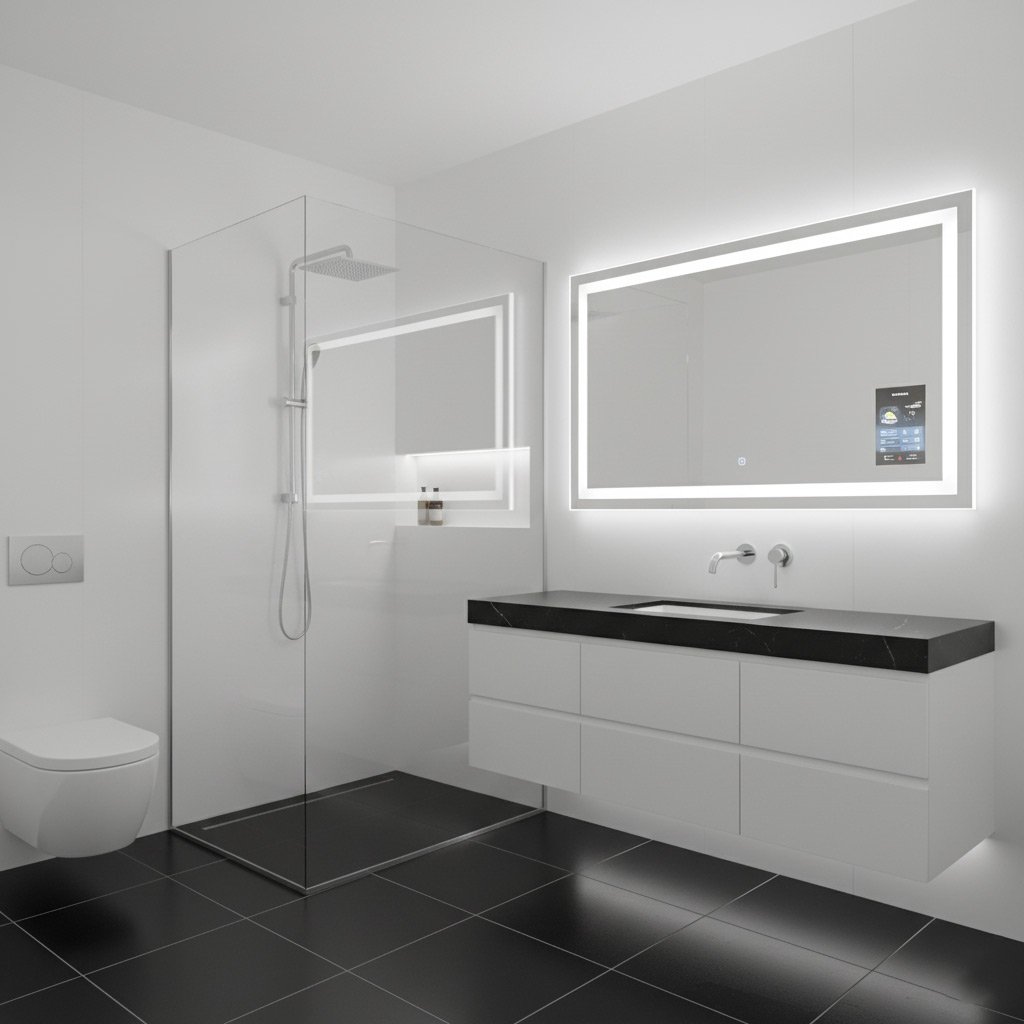
Swap a full‑wall glass panel for a single, frameless door. It still feels open, but you save on glass thickness and hardware. Keep the shower footprint modest—a 36‑inch square can look just as grand as a larger tub‑in‑shower when you add a sleek niche.
Mix high‑impact finishes with budget‑friendly basics
Use a premium tile as an accent strip instead of covering every wall. A 6‑inch marble border paired with plain subway tile creates a designer vibe for a fraction of the cost.
- Accent strip: 2–3 feet of marble, $200‑$300.
- Standard tile: $5‑$8 per sq ft.
- Grout & sealant: $0.50 per sq ft.
Choose a quartz countertop for the vanity and a laminate shower bench for seating. The visual contrast tricks the eye into thinking everything is top‑tier.
Lighting and accessories that scream upscale
Install LED strip lighting behind a recessed niche. It adds drama without the cost of a chandelier. Opt for brushed‑nickel fixtures—they’re cheaper than polished chrome but still look polished.
Finish with a few well‑placed accessories: a sleek soap dispenser, a matte‑black towel bar, and a simple glass shelf. Those details pull the whole look together without blowing the budget.
Case Study: Sacramento Homeowner Cuts $8,000 from a Custom Glass Shower Project
The Situation
Mike, a first‑time remodeler in East Sacramento, fell in love with a floor‑to‑ceiling glass enclosure that promised a spa‑like vibe. The contractor’s estimate hit $22,500, with a hefty line item for “premium glass.”
He was ready to walk away—until he asked the right questions.
The Savings Playbook
Mike and his crew dissected the quote and found three low‑hanging fruit:
- Glass thickness: The spec called for ¾‑inch tempered glass. Switching to ½‑inch with a reinforced frame shaved $3,200.
- Prefabricated framing: Instead of a custom‑built metal frame, a modular aluminum system saved $2,500.
- Off‑season labor: Scheduling the install for late November locked in a 15% discount, knocking another $2,300 off the bill.
Those moves alone trimmed $7,900. The final $100 came from negotiating a bundled discount on the new faucet set.
What Others Can Steal
Mike’s story proves you don’t need a miracle to slash costs. Focus on:
- Questioning every material spec.
- Seeking modular alternatives.
- Timing the job when contractors have downtime.
Apply these tactics, and you’ll keep the luxury look while keeping the budget in check.
Final Words
Now that you’ve seen the numbers and the shortcuts, the next move is simple: reach out to a Sacramento‑based shower specialist who knows the local permit maze and can lock in a price before surprise fees creep in. A quick phone call can save you weeks of back‑and‑forth and keep your budget on track.
Three quick actions to lock in savings
- Ask for a detailed, line‑item quote that separates material, labor, and permits.
- Request references from recent New Showers projects in the area.
- Schedule a pre‑installation walk‑through to spot potential plumbing reroutes early.
When you sit down with a contractor, bring this checklist and watch the price drop like a hot shower on a cold morning. The right partner will respect the numbers you’ve studied and help you walk away with a sleek shower—no hidden costs, no regrets.
People Also Ask
What is the average cost of installing a new shower in Sacramento?
The typical price range for a new shower in Sacramento is $5,000 to $12,000, depending on size, materials, and labor. High‑end custom installations can exceed $15,000, while basic remodels may stay under $5,000.Are permits required for a shower remodel in Sacramento?
Yes, most shower remodels need a building permit, especially if plumbing or structural changes are involved. Permit fees usually add $150‑$500 to the overall project cost.How can I lower the cost of a custom glass shower without sacrificing style?
Choose standard glass thickness (½‑inch) instead of premium ¾‑inch, and opt for frameless designs with minimal hardware. Pair the glass with a simple tile backdrop and use prefabricated shower bases to reduce labor expenses.What labor strategies help avoid overcharges from contractors?
Get at least three detailed quotes, verify each includes a breakdown of materials, labor, and permits, and negotiate a fixed‑price contract. Request a schedule of values and hold back a small retainage until final inspection to ensure quality work.Can I reuse existing plumbing to save money on a new shower?
Reusing the existing rough‑in plumbing can cut costs by 10‑15%, but only if the new shower layout aligns with the current pipe locations. If rerouting is necessary, factor in additional labor and material fees.
Sacramento Bathroom Remodel specializes in high-quality bathroom renovations, bringing over 15 years of craftsmanship to homes across Sacramento. Their team combines local knowledge with a commitment to personalized design, ensuring each project reflects the unique style of the community. With a reputation for reliable service and attention to detail, they transform spaces into functional, beautiful retreats.
Need Bathroom Remodel?
We transform Sacramento bathrooms into functional, modern spaces in days, not weeks, serving ZIPs 95814, 95815, 95661, 95765, 95630. Our streamlined process minimizes disruption while delivering lasting quality.
Get Remodel Estimate